Account registration guide on the floor Livecoin.net coin investment purchases


In this article I will guide you to  register for an account on the floor Livecoin.net  ( Link Website ) to purchase, transaction Cryptocurrency (electronic money).
Livecoin.net known as a trading platform, trading Cryptocurrency (electronic money) reputable, established and registered in England and community tradecoin rated as one of the exchanges leading reputation besides  Bittrex.com  and  Poloniex.com

Registration Guide Account Livecoin floor

Access the " Home " button Livecoin and click  Open a Trade Account "
Livecoin.net
On the next page, in which:
  • Username  : Enter your username
  • Password  : Enter password
  • Repeat your password  : Reset password
  • E-mail  : Fill in your email
  • Referral code  : Livecoin-pDnVdVNa   (Enter this code)
  • Tick're not robots
  • Tick terms:  I have read and agree to the ... ..
Click  "countinue"
Livecoin.net

Shortly afterwards you will receive an email including the activation sequence and confirm the registration link. (You copy the serial number, and click on the link in the email)
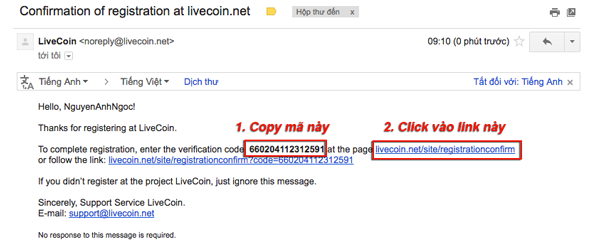
Livecoin.net
After clicking the link you will be redirected to the page shown below, paste the copied sequence in the box  "Confirmation Code"  then press  "Confirm"
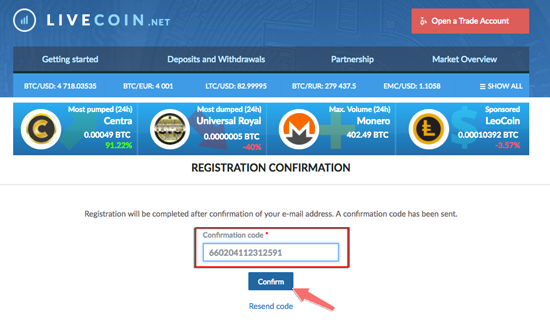
Livecoin.net
Now you will be asked to sign in again.
Livecoin.net
Once logged in you will be asked to create a PIN. Please enter a 4-digit PIN code (4 numbers you to think and to remember it) and click  "Continue"
Livecoin.net
A new window appears asking you to enter the PIN again to reconfirm. Press  "I have read ..."
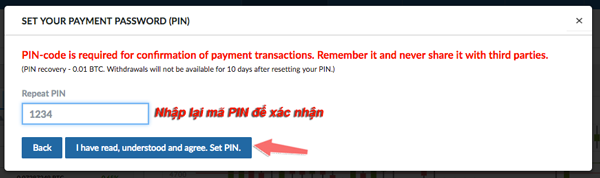
Livecoin.net
Success message as shown below.
Livecoin.net

Enable security guide 2FA (Authy) account Livecoin

With the investment account at any floor you should also enable security Authy then, here is how to secure a safer 2-step help so much. Basically after enabling security ie you will Authy must log in 2 layers,
  • The first is to enter a username and password,
  • Next enter the random 6-digit on the Google Authenticator app on a new phone, log into your account.
To enable security Authy, Livecoin your account  Account -> Security
Livecoin.net
Next select the  "Level 2 advanced". Click  "Change security level"
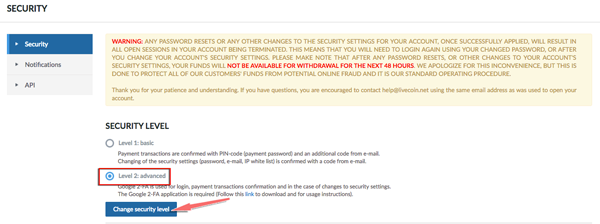
Livecoin.net
Now you need to:
  1. Get a pen and paper to record the code Secret code kept in the closet later restored in case of loss or lost phone app
  2. Download the Google Authenticator app on your phone  (depending on the Appstore or Google Play on your iOS or Android users offline)
  3. Enable scanning a QR code on this app and scan the code nhé
  4. Press the  "Continue"
Livecoin.net
Shortly afterwards you will receive an email from Livecoin next.
  • Copy the serial number in the email nhé
Livecoin.net
Return Livecoin you need:
  • Copy paste the above sequence in
  • Enter your PIN (PIN was created in the previous step)
  • Enter 6 random numbers in the Google Authenticator app on your phone to
  • Click  "Continue"
Livecoin.net
Such is done, now you will be asked to sign in again with your username and password.
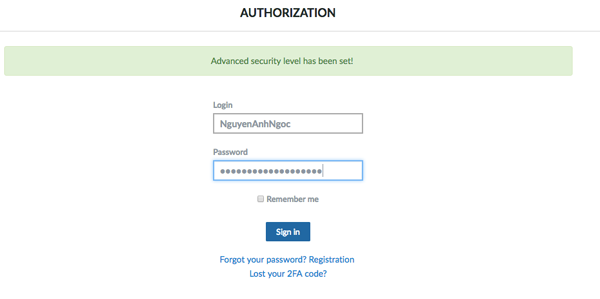
Livecoin.net
Then you need to enter the code on the Google Authenticator app Authy on.
Livecoin.net

Guide purchase - investment on the floor Livecoin

Next I will guide you how to load Bitcoin wallet on the floor in order to buy the copper Altcoin Livecoin other, then wait reserves increased and sold interest-nhé!
I will take the example of buying Firstcoin copper, a copper coin and will show great potential to appreciate in the near future there.
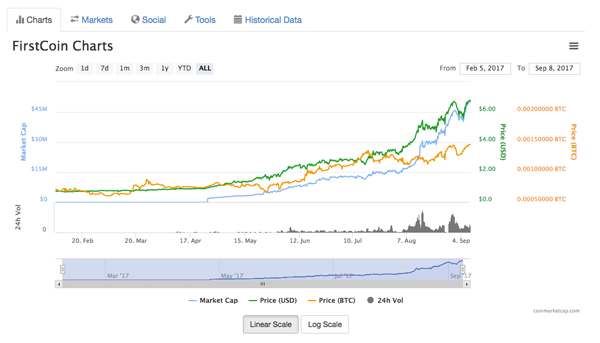
Livecoin.net
Basically to buy any contract you should use altcoin Bitcoins to buy, so the first step is you need to transfer Bitcoin wallet on the floor Livecoin first.

Transferring Bitcoin wallet on the floor Livecoin

To load into your Bitcoin wallet should get on the floor Livecoin address before. In Section  banlance
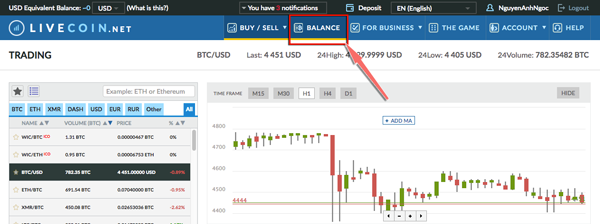
Livecoin.net
Pull down Bitcoin typed into the search box, then press the button in line Bitcoin "DEPOSIT"
Livecoin.net
A window appears, you copy this Bitcoin wallet address offline.
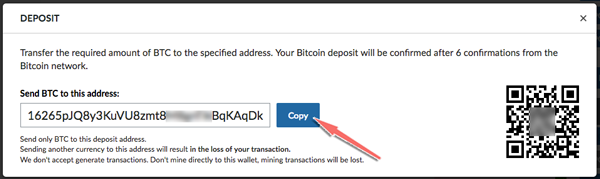
Livecoin.net
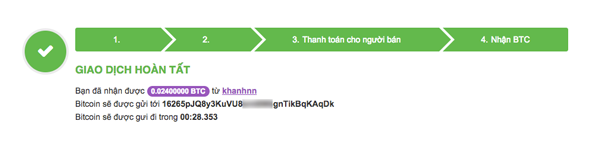
Now you need to transfer Bitcoin wallet address above. Moved anywhere to come for this, however, if you are a novice investor, should use the money to buy Bitcoin floor VND  Remitano  and transfer it into the wallet on Livecoin Bitcoin.
Livecoin.net
After moving from Remitano Bitcoin, about 15-30 minutes later you will see the number of Bitcoin wallet on the floor appeared Livecoin.
Note:  Only when the BTC displayed in the Available column then you have begun transactions nhé

Livecoin.net
To check your transaction history can also go to  "Transaction history"
Livecoin.net

Buying guides on the floor Altcoin Livecoin

So you've got Bitcoin already, now is the time you can use it to buy some Bitcoins other Altcoin Council aims wait reserves rose. Does your coin buyer can not tell the details for you, it needs you to analyze, monitor and research.
In this article I will guide you to buy FirstCoin (I said above), but why buy FirstCoin then I believe it will individuals rose into the future because:
  • In the past 4 months FirstCoin still rising average 180% per month
  • FirstCoin plans to expand its network of global ATM transactions, see more information at www coinatms com
  • FirstCoin investment is entrusted own floor ( www FirstCoin Club ) so communities are involved FirstCoin huge purchase. But when more people buy, the market capitalization and volume traded FirstCoin greater will push prices up higher. (This was similar happened with  copper Bitconnect  in recent years.)
  • ...
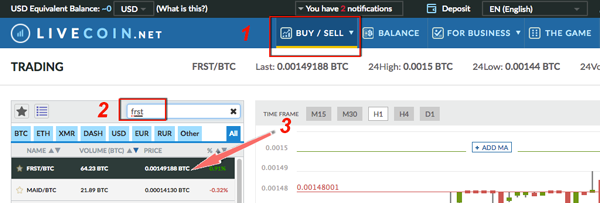
Ok so temporary, but now we try to buy some copper FirstCoin offline. To conduct buy / sell you to the menu  "BUY / SELL" (1)
Later:
  • In the search box type in the name you want to buy copper coin  (2) ,  here you can type or Frst FirstCoin
  • Right after that will appear below the line of coin transactions you search  (3)  click on that line
Livecoin.net
Pull down you will see two items:
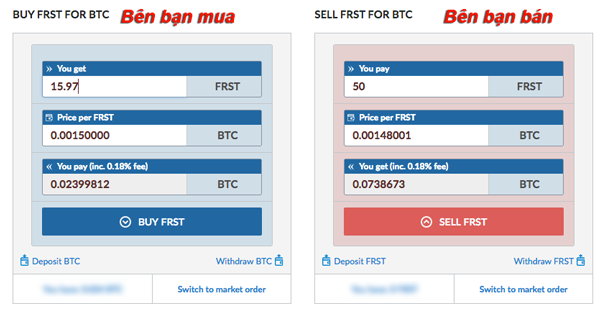
  • BUY FOR frst BTC  (Inside you buy)
  • Frst SELL FOR BTC  (Inside you sell)
Livecoin.net
So if you buy it now: (left column)
  • You get:  type the number FirstCoin want to buy (which show the number of stars to match the number of BTC you)
  • Price per frst:  this will be the price of Bitcoin FirstCoin is calculated by (auto show)
  • You pay:  the total amount you pay per Bitcoin (Licoin automatically calculated)
Press the button  "BUY frst"  to buy.
Similarly if you want to sell it (right column)
  • You pay:  type the number FirstCoin want SALE
  • Price per frst:  this will be the price of Bitcoin FirstCoin is calculated by (auto show)
  • You pay:  the total amount of Bitcoin you would get (Licoin automatically calculated)
Press the button  "SELL frst"  for sale.
After the purchase is complete you can go to the menu "My orders" to view your transaction history.
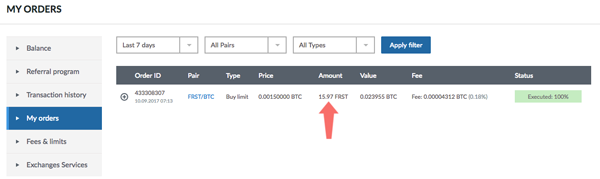
Livecoin.net
Go back to the Balance for in section you'll find the amount shown in column Available FirstCoin. Now that you have successfully purchased FirstCoin already.
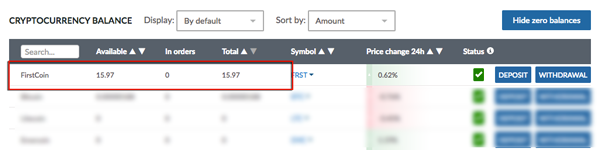
Livecoin.net
This is how to buy / sell or people often referred to as trade coin (traders) ie you buy at low prices, appreciation and sold for profit in accordance with the goals you set (probably 10 % -20% or 30%, ...). If you see this coin may have potential long-term storage at 2-4 months (hold) for profit-x3-x4 x2 ... x10.
When you decide  to sell Firstcoin  into BTC Okay, now you do not want to invest anymore or want to withdraw money, the root of the Bitcoin can move about  the floor Remitano  to sell to Vietnam Dong. Follow the next step to sell BTC following the VND and move into your account Vietcombank offline.

Transfer Guide Livecoin about Bitcoin from floor to sell for VND Remiatano

First you need to get your address on the floor for Remitano ago. Log into your account later Remiatano into position  WALLET BTC -> ADD
Copy address Remitano wallet on the floor slightly.
Livecoin.net
Livecoin turned to the floor, go to  BALANCE,
Livecoin.net
Bitcoin in selected lines  "WITDRAWAL"
Livecoin.net
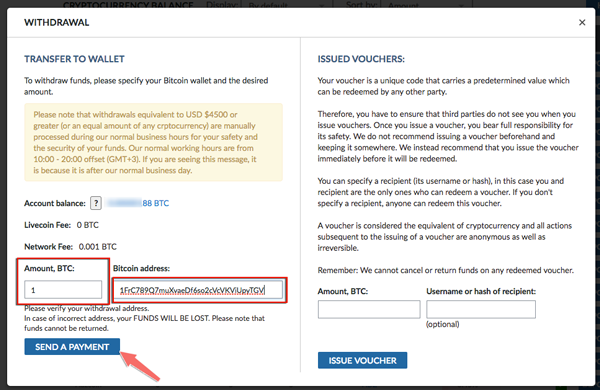
A window will appear:
  • O  Amount, BTC:  Enter the amount you want to withdraw Bitcoin
  • O  Bitcoin address:  Paste the address into the wallet on Remitano
  • Click " SEND A PAYMENT "
Livecoin.net
Note :  The limit for withdrawal of Livecoin floor is 4.500 USD per day. So if you want to draw a lot of these will need to wait through the day later.
When Bitcoin was transferred  for Remitano  your right, you will take steps to sell Bitcoins into VND for buyers and withdrawn on account advances in 1 minute Vietcombank offline.

Epilogue

So with this article I hope you have instructions for the account registration on the floor Livecoin and conduct investment transactions other Altcoin colleagues are listed here.
Livecoin floor may not be big and popular with floor  Bittrex.com  and Poloniex com but it is different especially because there are some very prospective copper coin is traded on Bittrex and Poloniex here but not there, namely copper FIRSTCOIN in this tutorial example.

Getting product security engineering right


Product security is an interesting animal: it is a uniquely cross-disciplinary endeavor that spans policy, consulting,
process automation, in-depth software engineering, and cutting-edge vulnerability research. And in contrast to many
other specializations in our field of expertise - say, incident response or network security - we have virtually no
time-tested and coherent frameworks for setting it up within a company of any size.


In my previous post, I shared some thoughts
on nurturing technical organizations and cultivating the right kind of leadership within. Today, I figured it would
be fitting to follow up with several notes on what I learned about structuring product security work - and about actually
making the effort count.


The "comfort zone" trap


For security engineers, knowing your limits is a sought-after quality: there is nothing more dangerous than a security
expert who goes off script and starts dispensing authoritatively-sounding but bogus advice on a topic they know very
little about. But that same quality can be destructive when it prevents us from growing beyond our most familiar role: that of
a critic who pokes holes in other people's designs.


The role of a resident security critic lends itself all too easily to a sense of supremacy: the mistaken
belief that our cognitive skills exceed the capabilities of the engineers and product managers who come to us for help
- and that the cool bugs we file are the ultimate proof of our special gift. We start taking pride in the mere act
of breaking somebody else's software - and then write scathing but ineffectual critiques addressed to executives,
demanding that they either put a stop to a project or sign off on a risk. And hey, in the latter case, they better
brace for our triumphant "I told you so" at some later date.


Of course, escalations of this type have their place, but they need to be a very rare sight; when practiced routinely, they are a telltale
sign of a dysfunctional team. We might be failing to think up viable alternatives that are in tune with business or engineering needs; we might
be very unpersuasive, failing to communicate with other rational people in a language they understand; or it might be that our tolerance for risk
is badly out of whack with the rest of the company. Whatever the cause, I've seen high-level escalations where the security team
spoke of valiant efforts to resist inexplicably awful design decisions or data sharing setups; and where product leads in turn talked about
pressing business needs randomly blocked by obstinate security folks. Sometimes, simply having them compare their notes would be enough to arrive
at a technical solution - such as sharing a less sensitive subset of the data at hand.


To be effective, any product security program must be rooted in a partnership with the rest of the company, focused on helping them get stuff done
while eliminating or reducing security risks. To combat the toxic us-versus-them mentality, I found it helpful to have some team members with
software engineering backgrounds, even if it's the ownership of a small open-source project or so. This can broaden our horizons, helping us see
that we all make the same mistakes - and that not every solution that sounds good on paper is usable once we code it up.


Getting off the treadmill


All security programs involve a good chunk of operational work. For product security, this can be a combination of product launch reviews, design consulting requests, incoming bug reports, or compliance-driven assessments of some sort. And curiously, such reactive work also has the property of gradually expanding to consume all the available resources on a team: next year is bound to bring even more review requests, even more regulatory hurdles, and even more incoming bugs to triage and fix.


Being more tractable, such routine tasks are also more readily enshrined in SDLs, SLAs, and all kinds of other official documents that are often mistaken for a mission statement that justifies the existence of our teams. Soon, instead of explaining to a developer why they should fix a particular problem right away, we end up pointing them to page 17 in our severity classification guideline, which defines that "severity 2" vulnerabilities need to be resolved within a month. Meanwhile, another policy may be telling them that they need to run a fuzzer or a web application scanner for a particular number of CPU-hours - no matter whether it makes sense or whether the job is set up right.


To run a product security program that scales sublinearly, stays abreast of future threats, and doesn't erect bureaucratic speed bumps just for the sake of it, we need to recognize this inherent tendency for operational work to take over - and we need to reign it in. No matter what the last year's policy says, we usually don't need to be doing security reviews with a particular cadence or to a particular depth; if we need to scale them back 10% to staff a two-quarter project that fixes an important API and squashes an entire class of bugs, it's a short-term risk we should feel empowered to take.


As noted in my earlier post, I find contingency planning to be a valuable tool in this regard: why not ask ourselves how the team would cope if the workload went up another 30%, but bad financial results precluded any team growth? It's actually fun to think about such hypotheticals ahead of the time - and hey, if the ideas sound good, why not try them out today?


Living for a cause


It can be difficult to understand if our security efforts are structured and prioritized right; when faced with such uncertainty, it is natural to stick to the safe fundamentals - investing most of our resources into the very same things that everybody else in our industry appears to be focusing on today.


I think it's important to combat this mindset - and if so, we might as well tackle it head on. Rather than focusing on tactical objectives and policy documents, try to write down a concise mission statement explaining why you are a team in the first place, what specific business outcomes you are aiming for, how do you prioritize it, and how you want it all to change in a year or two. It should be a fluid narrative that reads right and that everybody on your team can take pride in; my favorite way of starting the conversation is telling folks that we could always have a new VP tomorrow - and that the VP's first order of business could be asking, "why do you have so many people here and how do I know they are doing the right thing?". It's a playful but realistic framing device that motivates people to get it done.


In general, a comprehensive product security program should probably start with the assumption that no matter how many resources we have at our disposal, we will never be able to stay in the loop on everything that's happening across the company - and even if we did, we're not going to be able to catch every single bug. It follows that one of our top priorities for the team should be making sure that bugs don't happen very often; a scalable way of getting there is equipping engineers with intuitive and usable tools that make it easy to perform common tasks without having to worry about security at all. Examples include standardized, managed containers for production jobs; safe-by-default APIs, such as strict contextual autoescaping for XSS or type safety for SQL; security-conscious style guidelines; or plug-and-play libraries that take care of common crypto or ACL enforcement tasks.


Of course, not all problems can be addressed on framework level, and not every engineer will always reach for the right tools. Because of this, the next principle that I found to be worth focusing on is containment and mitigation: making sure that bugs are difficult to exploit when they happen, or that the damage is kept in check. The solutions in this space can range from low-level enhancements (say, hardened allocators or seccomp-bpf sandboxes) to client-facing features such as browser origin isolation or Content Security Policy.


The usual consulting, review, and outreach tasks are an important facet of a product security program, but probably shouldn't be the sole focus of your team. It's also best to avoid undue emphasis on vulnerability showmanship: while valuable in some contexts, it creates a hypercompetitive environment that may be hostile to less experienced team members - not to mention, squashing individual bugs offers very limited value if the same issue is likely to be reintroduced into the codebase the next day. I like to think of security reviews as a teaching opportunity instead: it's a way to raise awareness, form partnerships with engineers, and help them develop lasting habits that reduce the incidence of bugs. Metrics to understand the impact of your work are important, too; if your engagements are seen mostly as a yet another layer of red tape, product teams will stop reaching out to you for advice.


The other tenet of a healthy product security effort requires us to recognize at a scale and given enough time, every defense mechanism is bound to fail - and so, we need ways to prevent bugs from turning into incidents. The efforts in this space may range from developing product-specific signals for the incident response and monitoring teams; to offering meaningful vulnerability reward programs and nourishing a healthy and respectful relationship with the research community; to organizing regular offensive exercises in hopes of spotting bugs before anybody else does.


Oh, one final note: an important feature of a healthy security program is the existence of multiple feedback loops that help you spot problems without the need to micromanage the organization and without being deathly afraid of taking chances. For example, the data coming from bug bounty programs, if analyzed correctly, offers a wonderful way to alert you to systemic problems in your codebase - and later on, to measure the impact of any remediation and hardening work.


The recession of 2012-13 and the taper tantrum

I admit this is a rather strange title for a post, but bear with me. Every once in a while I reflect back on the so-called "taper tantrum" event in the summer of 2013 when Fed Chair Ben Bernanke made an off-the-cuff remark that the FOMC was thinking of maybe slowing down the pace QE3 asset purchases (see here). The stock market had a temporary sell-off, which turned out to be no big deal. What I find more interesting is how long bond yields rose sharply and persistently. Even more interesting, real bond yields behaved in this manner--see the figure below.


OK, so maybe the initial sell-off of bonds could be interpreted as the market being surprised that QE3 (an open-ended program) might terminate earlier than expected. But I just can't believe that QE programs can have such persistent effects on real interest rates. If that's the case, then what explains the broad pattern on display above, including the decline in real yields over 2011-2013?

I attribute it largely to the recession of 2012-2013. Wait, what recession, you say? Well, let's take a look. Contrary to standard practice, I'm going to look at per capita consumption (of nondurables and services). Here is what the data looks like. 
Consumption growth per capita was negative from 2012.1-2013.3. The taper tantrum occurred in 2013.3.  As you can see by this measure, the economy weakened considerably over the period 2011-2013. Over the same time, real bond yields declined. This is most easily explained as the consequence of an increasingly bearish outlook manifesting itself as an increase in the demand for safety (bonds).

Consumption growth turned positive in 2013.4, and continued to climb well into 2015. So while the tantrum may have contributed to the spike up in yields, the reason they stayed higher is because of an increasingly bullish outlook for the economy.

Does this interpretation make sense? What events were leading to the bearish outlook beginning in 2011. Certainly the events in Europe had something to do with it. I also think that domestic factors had a role to play, in particular, fiscal policy. Consider the following diagram.

What would the consumption and GDP dynamic have looked like if government purchases (per capita) had instead remain constant?